
Poirot's Investigation
The A.B.C. MurdersThis thread follows Poirot from unease about an anonymous letter through his reconstruction of the killer’s psychology and his final confrontation with Franklin Clarke.
increasing Bearing strength in each event
 decreasing
Bearing strength in each eventdecreasingUnease Without Proof

An Expert's Impression
A troubling letter
Poirot cannot identify a practical clue in the first warning, yet experience tells him something is wrong. He refuses to treat unease as proof.
A challenge accepted
The police call the message a hoax, but Poirot keeps its implications in mind. His task begins as an effort to understand an unknown mind.
Reading the Scene

Evidence in the Shop
An unnatural object
Poirot studies the railway guide and the shop’s arrangement, noticing the mismatch between an ordinary murder and an apparently planted clue.
People and habits
He questions witnesses indirectly and learns how easily a stranger could go unnoticed during the busy evening. The investigation resists simple answers.
The Mind Takes Shape

A Portrait Without a Face
Character from clues
Poirot infers that the letter writer seeks attention and may possess a hidden sense of inferiority. These deductions remain tentative, but they guide his attention beyond fingerprints.
Motive before identity
He argues that a madman still acts from a private logic. Without discovering that logic, the next victim cannot be predicted reliably.
The Stocking Motif
A Repeated Visitor
A detail returns
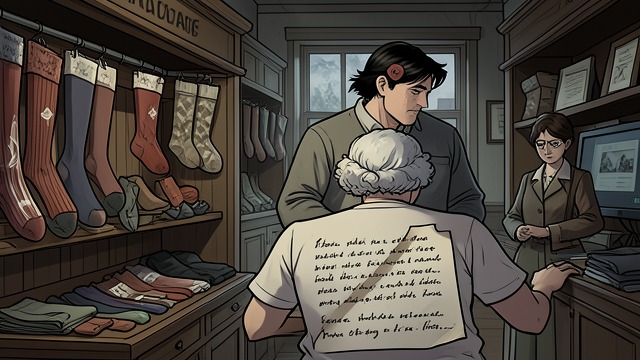
Thora Grey recalls a man selling stockings at Combeside. Poirot connects the account with earlier references to door-to-door sales and new stockings.
A usable lead
The repeated detail transforms speculation into an investigative path. A travelling salesman could observe households and move among towns without attracting notice.
The Real Adversary
The Case Is the Man
A contradiction investigated
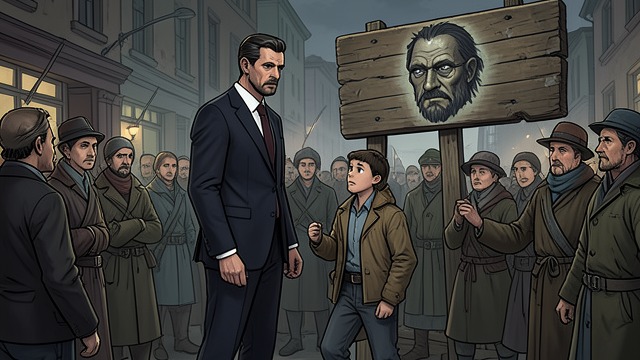
Poirot rejects the apparent solution because Alexander Bonaparte Cust’s personality does not fit the daring killer. The genuine Bexhill alibi sharpens his doubts.
The hidden design
Conversation and inference reveal Franklin Clarke’s motive and his use of Cust as a decoy. Poirot confronts him and brings the scheme into the open.
June 1935, before the first murder
June 22, 1935, at Andover
After the Bexhill murder
September 1935, after the fourth warning
Near the end, after Cust is detained
